Showing posts with label number-based decision. Show all posts

Wednesday, March 2, 2016

Doing The Right Thing - Part 1

As conversations about The Value Crisis proliferate and mature, there is still a desire to find ways of applying the book's principles in some useful manner.  In this post, I present two common and easily recognized ethical dilemmas.  Then I share a argument for how not to resolve them, along with some hints as to how you could, by recognizing the difference between number-based and human values.

Both topics arose in everyday conversations in the last month.


Conversation #1:  A colleague was telling me about his friend who is a fanatical watcher of Freecycle lists.  These are community initiatives where people who no longer want a household item can post it on a list so that anyone who needs that item can come by and pick it up for free.  Part of the intent is obviously to keep potentially useful things out of the landfill.  However, this friend has turned the service into a business for himself, racing to the donor before anyone else, picking up the free items, and then turning around and selling them.  Is this ethical?  The owner was giving the stuff away for free anyway, and anyone else could do the same, so what's the harm?

Conversation #2:  Canada is in the midst of bringing in 25,000 Syrian refugees to become fully-fledged Canadians.  At the same time, the Canadian government wants to cut back on their military presence in Syria, potentially reducing their role in taking out the regimes that are responsible for there being refugees in the first place.  The cost of transporting, housing, and feeding all these refugees is enormous.  Is it really ethical to fast-track this particular class of immigrant and spend so much on them when there are already plenty of citizens in just as a great a need for housing and food?

A common way to think about such dilemmas is to consider who benefits and who is harmed by such actions.  The basic principle is that an ethical choice would be the action that provides the greatest good for the greatest number.  This philosophy, known as utilitarianism, seems quite reasonable, and most would accept the concept in theory.  One attraction is that it has the potential to provide a clear-cut, rational decision based on a rational and objective calculation.

Let's consider the dilemmas I presented in light of utilitarianism.  In the first example, the person giving away the object has presumably decided that they can't be bothered to sell it - their benefit is simply getting rid of it, while knowing that it's going to a good home, not the landfill.  It is likely that more than one person may desire the free object, but only one person can own the item.  If the recipient gets it for free, then a second person derives benefit.  However, if my colleague's friend gets there first and goes to the bother of selling the object, then he gets some cash (second benefit) and a third person gets a good deal on a used object.  In terms of assessing harm, no-one loses anything that they already had, so it's win-win-win, right?

In the second example, it is true that taking thousands of people from their homeland and livelihoods, flying them to a foreign country, providing them with all of the basic necessities at no cost to them (but significant cost to the host citizens), teaching them a new language, and then trying to find them affordable housing and employment - all makes no economic sense.  Nor is it fair to many of the host country's own people who are already struggling with the same challenges, or to immigrants from other countries who have to wait years to be accepted.  Many people are harmed compared to benefit for a relative few.

My difficulty with utilitarianism is that it is essentially a number-based value system.  It attempts to maximize a supposedly quantifiable measure of happiness (or more accurately, "utility").  Even assuming that most people can find a common consensus of what constitutes good, and that they can predict outcomes with sufficient accuracy, there are problems with the philosophy.  Critics of utilitarianism say that under such a value set, it is easy to start arguing that the ends justify the means.  In other words, we stop considering the ethics of the means because a utility-maximizing value system is teleological - meaning its morality is determined by the end result.  When put in this light, it is quite easy to come up with examples of where the ends do not justify the means.  Many thousands of consumers might derive significant benefit from the work of a relatively small number of children enslaved in a foreign factory making cheap goods, but that's not the kind of calculation we should be performing to determine ethical practices.

A common alternative to a results-based ethical system is a rule-based one, such as can be found in most religions.  We measure our actions (the "means") against a predetermined set of rules.  Of course, such systems have there own distinct pitfalls.  Rules are inflexible, they don't respond well to exceptions, and they can easily do more harm than good.  Democracy - a numbers-based value system studied extensively in Chapter 9 of The Value Crisis - defends ethics by its means:  A decision is justified if the majority vote that way.  Note the inevitability of the minorities suffering under both utilitarianism and democracy.

Still, in the end, most people rely on some combination of the above to guide their actions (or to justify choices that might be questionable!).  At other times, we struggle to know what is the right thing to do.  So here are some observations, based on our original ethical dilemmas.

When I was told about the Freecycle 'entrepreneur' who grabs free stuff and sells it, I was immediately repulsed by this.  Clearly it was contrary to my own value system, so I wondered what it was that I had instinctively found abhorrent.  It is by no means obvious.  For example, had the reseller paid the original owner even a tiny sum instead of taking it for nothing, I wouldn't have the same reaction - and that's the critical clue.  It is not the profit that irked me.  Rather, I believe it to be the transformation of the gesture from one value system to another that rubbed me the wrong way.

When someone takes an item of potential monetary value and gives it away, they are expressing a different kind of value.  It's not quantifiable.  As noted above, they are freeing themselves of an item they no longer need; they can relax knowing they're not adding to the community's trash pile; and they can rejoice in the fact that it is going to someone who needs it at no cost to the recipient.  That conveys considerable benefit in human values: simplification, environmental responsibility, and generosity.  By participating in the established Freecycle system, they put the item out there with an understanding and trust that it will go to a fellow citizen for free.

'Entrepreneurs' who crassly take advantage of this system, abuse the understanding and trust, and profit monetarily from the expression of those human values are twisting and diminishing them.  It doesn't matter whether the donor is aware of this or not (and almost certainly they are not aware that this is happening).  In my books, it is simply wrong.  Integrity means doing the right thing, even when no-one is looking.

So how would anyone know that this is the wrong thing, if the feeling in their gut is either absent or ignored?  The key, and the point of this post, is to note the value system transformation.  The initial act was an expression of human values.  Turning it into a number-based transaction disrespectfully negates those human values, and once you've done that, you can't go back. The 'creation' of monetary value from nothing was not, in fact, from nothing at all - it came at a cost to human values.  (Chapter 8 of The Value Crisis talks more about what happens when we attempt to use value systems interchangeably - with some dramatic examples of the harm that can be done.)

Monetary values, in my opinion, do not have the right to trump unquantifiable values.  That kind of thinking leads to huge global challenges, of the sort we are only now beginning to acknowledge.  And fixing those huge issues starts with each and every one of us being able to recognize the right thing to do.

Perhaps that's enough to chew on for now.  I'll talk about the refugee conundrum in "Doing The Right Thing - Part 2".


Friday, January 29, 2016

When are numbers bad?

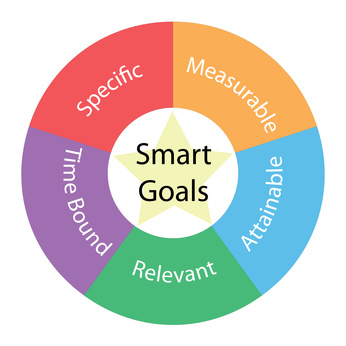
Two years ago, I wrote a post about SMART goals, wondering whether society had developed a predilection to dismiss any goals or efforts that are not measurable.  I defended such immeasurable goals as being perfectly valid.  Then last week, a participant in our chapter-by-chapter exploration of The Value Crisis, asked if we should actually avoid SMART goals because they were number-based.  This is a common musing among readers: Is the book saying that numbers are bad?


The question highlights a distinction that cannot be over-emphasized:

Numbers are great.  It is our reliance on Number-Based Values that I question.

To answer the query that was raised at the meeting, there is nothing wrong with SMART goals.  If you can define a goal numerically, then it makes total sense to measure (and celebrate) your progress towards that goal.  If you choose to save $5,000 for a two-month vacation next year, I don't find any fault with that particular example of value-based decision-making.  Such a goal is not a demonstration of number-based values.  Why not?  Because we have not defined a situation in which more is always worth more.

On the contrary, the ultimate goal is quite specific: taking a two-month vacation.  The money is simply a means to an end.  Furthermore, the very nature of a properly formulated SMART goal is that it should incorporate a specific target, which can (and should) be interpreted as a definition of sufficiency.

Contrast this with a SMART goal that sets an objective of saving $10,000 more every year.  Now we are beginning to cross over the line.  A goal phrased in this way has milestones but no specific endpoint.  The money is no longer the means to an end - it has become the end in itself.  And we have made the tacit assumption that more money is always worth more.  That's true in a monetary (number-based) value system, but is it true when it comes to our quality of life?  Well, that's the $64,000 question, isn't it?

This is not an easy distinction to make.  As the discussion progressed, another participant asked if it was therefore more acceptable to set a specific dollar goal for money to be saved for your retirement (say $1,000,000) as opposed to setting a goal of a specific level of annual growth for your retirement investments (like 4%, for example).  Yes, there are probably subtle differences between the two goals, but I prefer to look at the bigger picture.  Is your overall goal really to have a certain amount of money when you retire, or should you be trying to define a certain quality of life that you hope to be enjoying when that day comes?

Better yet, perhaps you should be looking at the overall concepts of work and retirement.  That inquiry might involve examining your quality of life before your 65th birthday.  How many of us devote decades of our lives struggling at jobs that we consider onerous, with the major aim of better enjoying life when (and if) we reach a retirement age?  How many youth make life-altering career decisions solely on the basis of how much money they might make for the next four or five decades?

In The Value Crisis, I tell the story of how I observed folks in the previous generation 'retiring' but still working, and I asked them to define what retirement really meant for them.  It meant that they didn't have to work the same hours, but could choose to.  They stopped doing work that didn't interest them, and created understandings where they could take time off to enjoy a new project if an opportunity came up.  They avoided long-term work commitments and gave greater respect to their lives away from work  Why would anyone wait until they were in their 60's to take that approach to life?

So, working from that definition, I declared myself 'retired' before I was 40.  It doesn't mean I don't have to earn money any more - of course I do.  But it gave me a whole new outlook on how much I need (or don't), and what I am willing to do to get it.  My standard of living has gone down since then, but my quality of life has gone up.  A smart goal?  Well, for the most part, it's worked for me.

Tuesday, August 19, 2014

The Stray Coin


Early in the writing of The Value Crisis, I was trying to wrap my head around different behaviours that I was observing in myself and others.  It seemed to be that some people used number-based value thinking more than others, and I tried to find a simple way to illustrate this and perhaps even test for whether or not they were "Quantifiers" or not.

I have since abandoned the idea of trying to divide people into "Quantifiers" and "Qualifiers" in preference for the Value Personae theory that I based on the work of Robert Reich.  In Supercapitalism, Reich described different mindsets that we operate under: the consumer/investor and the citizen.  In Chapter Ten, I consider these as three distinct versions of what I call our value personae, and explore how they operate in an individual and collectively at the societal level.

Still, one scenario (that didn't make it into the book) remained as a useful way to consider these different behaviours.  It went something like this: 

You’re walking down the street on a sunny day with no one else around, when you glance down at the clean sidewalk and see a shiny dime.  Do you pick it up?  If your answer would be “Yes”, would you also pick up a nickel or a penny?  If you said “No” to the dime, for what coin denomination would you stop and pick it up?  If your original find were two nickels, would that change your answer?

I posed this series of questions to a number of people, and two distinct styles of decision-making emerged.

Sometimes, their decision to stop and pick up the money depended on how much money was there.  If they said “No” to the dime, then we would move on to increasingly larger values of cash until they said “Yes”.  In such instances, each one of these people had a tipping point – a numeric value at which their answer changed from “No” to “Yes”.  Of course, there are other factors, such as multiple coins versus a single coin, for example, that might affect their tipping point.  (Someone who would pick up a dime might not bend down to retrieve ten pennies.)  Their choice might also change if they were the ones that dropped the money in the first place.  However, the key point is that these people were always making a number-based decision.  A lower face value lowered the beneficial value of the act itself, resulting in a decision to leave the cash where it was and keep walking.  If they came across a sufficiently higher face value, the value of the money and the act of picking it up both increased in direct proportion, and a different choice was made: to stop and pick it up.

While this relationship between monetary value and likelihood of picking up a coin seems simple enough, a near-equal number of friends gave very different responses – saying they would pick up any coin, regardless of the amount.  They explained that for them this was not a number-based decision at all, but was related to a personal value:  sometimes the joy of finding something for nothing, or a belief in the luck acquired by picking it up, or an aversion to waste, or an attraction to money of any amount.  The act of picking up the money had real value to them, which was not necessarily determined by the quantifiable value of the money itself.

This inquiry is not so much about dividing people as dividing behaviours in a specific situation.  Of course, if we switch the question from a coin to a bill, then it probably becomes a number-based decision every time for everyone.  However, for the original coin example, there is no question that two types of decision-making were used:  Some said they based their decision on coin value, some said they didn’t.

The first type provides an example of how a strictly numeric value scale can be incorporated into a personal value system used to make everyday choices.  There is a direct, mathematical relationship between the face value of the money lying on the sidewalk and the decision of to the passer-by to pick it up or not:  “Is it worth my effort to stop, bend over, and retrieve the coin?  Hmmm.  What is the coin worth?”  Almost unconsciously, they are placing a monetary value on the interruption to their walking, doing a quantifiable comparison, and making a math-based decision.

Being an example of those who used the second type of decision-making, my reasoning is quite different.  In fact, I also pick up screws, lock washers, anything I see which might be useful.  I hate to see perfectly good objects just tossed aside, and I enjoy being able to later head to my collection of nuts and bolts and find just what I need at that moment.  My retrieving a coin is less about adding to the value of my pocket contents and more about satisfying a need to file the coin where it belongs – with other coins!  I have also met a few people who choose not to pick up coins – not because the money is not worth it, but because they believe the money should be left for those who might need it more.  This is a different, non-numeric value being expressed.

I started my little stray coin inquiry because I was curious about the prioritization of number-based value scales in individuals.  I had already theorized that society was demonstrating an increased tendency to look at the numbers first and apply mathematical judgements to arrive at value choices, so I wondered if certain people had similar tendencies.  It seemed to me that certain acquaintances were not just better with numbers - they seemed to more readily use number-based values when thinking about things like cars, real estate, whatever.

I don't think anyone exhibits pure number-based thinking.  Picking up a quarter and picking up twenty-five pennies are never exactly the same thing; other factors come into play.  On the other hand, most businesses will accept a twenty-five cent payment in either form.  (Not that we have pennies in Canada anymore...)  This particular trait of pure number-based values being found in business entities - especially publicly-traded corporations - is thoroughly examined in Chapter 7 of The Value Crisis.

And thus, my stray coin experiment is now relegated to this blog, but it has not been abandoned entirely.  I still think it is a useful way to illustrate different styles of decision-making, and it is still a wonderful way to open up the conversation about number-based values.

So, what coins would you pick up?  And more importantly, why?