One of the truly wonderful things about The Value Crisis discussion groups and speaking engagements is that my perspective gets challenged by intelligent people struggling to apply the concepts to everyday life. One such magical moment arose this week, when a participant in our chapter-by-chapter exploration of the book gave us a perplexing anecdote to puzzle out. Let me first set up the context...
We were discussing Chapter 3 (Money - The Number Culture), which includes a brief history of money, from the days of barter through to today's banking databases. One of the propositions of that chapter is that the barter of goods or services between two willing participants is always a win-win transaction. Both sides are getting something they want, and either employing a skill that they already have or giving something that they want less - hence the net value of both sides goes up. Such an exchange feels quite different when you instead look at two separate transactions that use money to quantify the value.
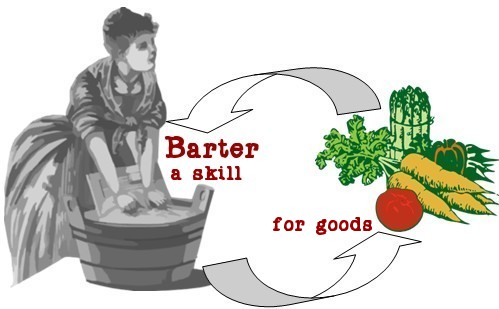
Barter actually capitalizes on the concept of marginal value. This economics term is used to convey the idea that the 'value' of a particular thing (to us) depends on the quantity of that thing that we already have. If I have hundreds of arrowheads, their marginal value to me is low, but if I have no baskets, the marginal value to me of a needed basket would be quite high. I would be very willing to trade a few arrowheads for a basket. Barter works when I find someone with many baskets (each therefore having a low marginal value for them), who needs an arrowhead or two.
So back to our story. The reader who shared the anecdote is an organic hobby farmer of sorts. She keeps a variety of livestock and is an enthusiastic promoter of permaculture practices. As she relates it, she had an experience where the long hours of back-breaking farm work had taken its toll and she wanted to get a massage. She had met a masseuse who was open to providing such a service in barter for some of the meat that the farmer raised on her land. Learning that the typical price for the service was $80, she gathered up $80 worth of organic beef and went in for the relaxing treatment.
Alas, afterwards, she was disappointed by how she felt about the transaction. Perhaps while in the midst of having the knots removed from her back, she was thinking about all the hours of work that had put them there: looking after her stock day after day, mucking out stalls, and hauling buckets of food for the grain-fed beef. And, in exchange for a significant portion of the end gains, she was getting perhaps less than an hour on a massage table. It didn't feel right.
This struck a chord with me. In a later chapter (Ch. 5 - The Value of Time), I talk about how difficult it was for me, as a newly self-employed person, to set a billable value for my time. I might do a day's work with community not-for-profits for $100, and then do the same work for a large corporation and bill more than ten times that amount. So what was the true value of my time? What should I bill clients who fell in between those extremes? Was it right that the client's budget always determine my fee? How could I determine if a particular project remuneration was "worth my time"?
My ultimate solution was how I felt about my contribution and corresponding compensation. If I felt I was being taken advantage of (or was taking advantage of someone else) I felt bad. Otherwise, I would consider the project a fair transaction. The numbers played no direct role. Now here was this woman voicing a familiar reaction: the massage-for-beef transaction didn't feel right. But this was barter! So what went wrong?
Most people initially see the disconnect in terms of the time differences. Farmers work long hard hours to grow, maintain, harvest, and prepare their produce for consumption. And here was my friend, trading a chunk of that for a service that was provided in a tiny fraction of that time. I agree that this would certainly be an influence. However, quantifying time and worth is full of all kinds of pitfalls. There are so many added variables. A dentist charges not just for the half-hour of teeth work, but also the training, capital costs of the office, etc. Part of a masseuse's fee has to take into account that they don't usually work full 8-hour days. Nor can they leverage economies-of-scale to massage more than one client at a time, the way a farmer might be able to double their herd with minimal additional effort and overhead.
No, upon reflection, I think something much more interesting happened to this transaction. The clue is the $80 value. The reader had looked up the posted value of the massage and then tried to put together a package of food that had the same monetary value. To me, that is not really barter. That is simply a transaction, using prices on both sides, that happens to use meat as a currency. Marginal value was no longer a key component of the feelings of value and worth. Instead, both players reverted to the quantified market value, which completely alters the quality of the relationship. As soon as the numbers come in, the barter doesn't even have to take place for the farmer to feel disappointed. She could simply contemplate how she had just paid $80 for a massage and then later think about how much work had gone into a totally separate sale of $80 worth of beef.
That's the thing about numbers and number-based values. They allow us to do things like instantly compare our salary to that of our spouse or a co-worker or a professional baseball player. Or compare a season of livestock management to a spa treatment. Such pursuits often to lead to bad feelings, no?
This blog is devoted to accessible explorations of the power and influence of number-based values in society. It builds on the unique perspectives and theories first introduced in The Value Crisis book. Check out our new PODCASTS! Comments and on-line discussion are welcome and encouraged (Blogger requires allowing 3rd party cookies).
Friday, February 12, 2016
Friday, January 29, 2016
When are numbers bad?
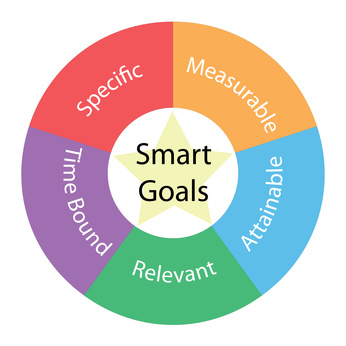
Two years ago, I wrote a post about SMART goals, wondering whether society had developed a predilection to dismiss any goals or efforts that are not measurable. I defended such immeasurable goals as being perfectly valid. Then last week, a participant in our chapter-by-chapter exploration of The Value Crisis, asked if we should actually avoid SMART goals because they were number-based. This is a common musing among readers: Is the book saying that numbers are bad?
The question highlights a distinction that cannot be over-emphasized:
Numbers are great. It is our reliance on Number-Based Values that I question.
To answer the query that was raised at the meeting, there is nothing wrong with SMART goals. If you can define a goal numerically, then it makes total sense to measure (and celebrate) your progress towards that goal. If you choose to save $5,000 for a two-month vacation next year, I don't find any fault with that particular example of value-based decision-making. Such a goal is not a demonstration of number-based values. Why not? Because we have not defined a situation in which more is always worth more.
On the contrary, the ultimate goal is quite specific: taking a two-month vacation. The money is simply a means to an end. Furthermore, the very nature of a properly formulated SMART goal is that it should incorporate a specific target, which can (and should) be interpreted as a definition of sufficiency.
Contrast this with a SMART goal that sets an objective of saving $10,000 more every year. Now we are beginning to cross over the line. A goal phrased in this way has milestones but no specific endpoint. The money is no longer the means to an end - it has become the end in itself. And we have made the tacit assumption that more money is always worth more. That's true in a monetary (number-based) value system, but is it true when it comes to our quality of life? Well, that's the $64,000 question, isn't it?
This is not an easy distinction to make. As the discussion progressed, another participant asked if it was therefore more acceptable to set a specific dollar goal for money to be saved for your retirement (say $1,000,000) as opposed to setting a goal of a specific level of annual growth for your retirement investments (like 4%, for example). Yes, there are probably subtle differences between the two goals, but I prefer to look at the bigger picture. Is your overall goal really to have a certain amount of money when you retire, or should you be trying to define a certain quality of life that you hope to be enjoying when that day comes?
Better yet, perhaps you should be looking at the overall concepts of work and retirement. That inquiry might involve examining your quality of life before your 65th birthday. How many of us devote decades of our lives struggling at jobs that we consider onerous, with the major aim of better enjoying life when (and if) we reach a retirement age? How many youth make life-altering career decisions solely on the basis of how much money they might make for the next four or five decades?
In The Value Crisis, I tell the story of how I observed folks in the previous generation 'retiring' but still working, and I asked them to define what retirement really meant for them. It meant that they didn't have to work the same hours, but could choose to. They stopped doing work that didn't interest them, and created understandings where they could take time off to enjoy a new project if an opportunity came up. They avoided long-term work commitments and gave greater respect to their lives away from work Why would anyone wait until they were in their 60's to take that approach to life?
So, working from that definition, I declared myself 'retired' before I was 40. It doesn't mean I don't have to earn money any more - of course I do. But it gave me a whole new outlook on how much I need (or don't), and what I am willing to do to get it. My standard of living has gone down since then, but my quality of life has gone up. A smart goal? Well, for the most part, it's worked for me.
Sunday, January 24, 2016
The Moral Case for Alex Epstein
A Review of The Moral Case for FossilFuels, Alex Epstein (2014, 256 pages), as published in Alternatives Journal, December, 2015, by Andrew Welch.
Alex Epstein wants to shake up the way that
we think about fossil fuels and challenge what behaviours we consider moral and
immoral. In his book The Moral Case
for Fossil Fuels, he proposes reframing the conflict of environmentalists
versus the hydrocarbon industry. It’s
not a question of fossil fuel usage being good or bad – it’s a question of what
standard of value we are using to judge it.
I agree.
The author is a self-labeled humanist – a term he uses to describe
someone who “treats the rest of nature as something to use for his benefit; the
nonhumanist treats the rest of nature
as something that must be served.” What
may at first appear to be conceit actually makes sense if we look deep enough
inside the value system of most humans.
He argues that we should all hold human life as our one and only
standard of value.
I believe this is a must-read book for
environmentalists and climate change activists, but it won’t be an easy
read. Firstly, it’s hard to read
anything that contradicts your strongly-held beliefs; however, questioning
those beliefs is essential to gaining a truly balanced perspective. Secondly, Epstein clearly targets an audience
on the totally opposite end of the spectrum, opening with ‘proving’ that all
the so-called ‘experts’ preaching the
supposed detrimental impacts of
rampant fossil fuel consumption are dead wrong and always have been. (The ironic single-quotes and sneering
italics are his frequent literary devices, not mine.) Thirdly, although he conveniently lists the
most common logical fallacies that surface in this debate, he happily (and
frustratingly) employs each one in his own arguments.
Epstein is a practical philosopher and that’s
where he shines. He’s not a scientist,
and when he attempts to take on science, his misuse and misrepresentation of
statistics and data is unmistakable and shoddy.
Like every other non-scientist (and, sadly, some scientists) he chooses
policy-based evidence over evidence-based policy. To be fair, it’s a habit all humans have:
being blind to evidence that contradicts our beliefs. Furthermore, he does also present facts that
many activists choose not to see.
However, he’s also happy to make up his own, such as “if there is no
equal or superior alternative, then any government action against fossil fuels
… is a guaranteed early death sentence
for bill ions.”
The book is highly critical of mainstream
thought leaders because they’re always preaching the costs of fossil fuels and
never the benefits. This is quite true,
and while the reason might be not so much a bias as a tacit acceptance that
such benefits go without saying, if we don’t consciously consider them, it may
well skew our perspective. Fossil fuels
have made near-miraculous contributions to our standard of living in the last
two centuries, and anyone who says we should stop using them needs to have
their arguments seriously questioned.
Fair enough.
Accepting that there are errors and bias on
both sides, I’d rather review the essence of his argument – that being, in his
words: “Mankind’s use of fossil fuels is
supremely virtuous – because human life is the standard of value, and because
using fossil fuels transforms our environment to make it wonderful for human
life.” And consequently, we should burn
more, not less.
The problem is the standard he has chosen
to judge our morality as a species. He
may be a humanist, but his goodness indicators are entirely quantitative measures:
More people, living more years, earning more money, to buy more stuff –
all good. For example, the only scale he
uses (repeatedly) to measure safety is number of deaths (including life
expectancy and infant mortality) – never health. Happiness?
Quality of life versus standard of living? Those he avoids entirely. By his singular measure of success, a planet
with 120 bill ion extravagant consumers, living 150 years each should be a
stunningly better place for all (all humans, that is). It’s a deeply-flawed more-is-always-better
approach for an author who claims to be writing about morality.
Wednesday, January 20, 2016
Exploring The Value Crisis Chapter-by-Chapter
This post is a bit of a departure from the
blog theme. Consider it an introduction
to the next series of postings (I hope).
I was very excited to see that The ValueCrisis is quite popular with book clubs – even clubs that normally only do
fiction. It seems that readers want to
talk about this book with their peers.
That was definitely one of my hoped-for outcomes when writing it.
However, it turns out that some readers
wanted to go even further. A few months
ago, two different book clubs (who had already done The Value Crisis as part of
their regular gatherings) approached me in the very same week and asked if it
might be possible to create a special club that explored the book as one
chapter per meeting.
I was ecstatic! Not only did this indicate an obvious
interest in the subject matter, but I had sat in on a few gathering nights
when clubs were discussing my book, and they often talked about the same
things. I wanted to know what they
thought about other chapters, but I was also determined to shut up, listen
carefully, and take notes on whatever they chose to talk about. Here, at last, might be an opportunity to
explore every nook and cranny.
The Caledon Public Library was quite
receptive to this very novel idea (no pun intended), and announced The ValueCrisis discussion series as a new program, exploring a different chapter every
two weeks.
Our first meeting was on
Please feel free to join us for any meeting, or contact me about starting a group in your area.
Tuesday, August 25, 2015
The second review
The second full review of The Value Crisis
was published by the well-respected Alternatives Journal.
I was totally blown away by this praise from such a prestigious journal. As with my first review, reprinting it here gives readers another forum where they can post
comments and feedback.
Andrew Welch has a thing about numbers. He loves them. But as he gradually began to see the connection between growing, multiple global crises and the lack of awareness surrounding the day-to-day human behaviour that produces them, he began to wonder if humanity’s over-reliance on numbers was responsible. “We use debt to conjure up trillions of dollars from nothing; we voraciously run through our planet’s limited resources; and we recklessly contaminate our environment with waste, byproducts and dangerous substances.” The Value Crisis is the product of his attempts to reconcile this disconnect between behaviour and consequence.
The value crisis referenced in the title is the conflict between our human value system, which is ancient, and our number-based value system, which has developed over time, most of it very recently. Welch’s premise is that these two systems are incompatible and unbalanced and that fundamental human values are being displaced at great cost to us all – personally, as a species, and ultimately for every creature on the planet. This crisis of values is posited as the greatest challenge facing society and as the root cause of most of our environmental, economic and social ills.
Welch traces the origins of the value crisis from the beginnings of numeracy and the invention of math, through theories of decision making and indicators of well-being, to the history of money, the workings of the global economy and the nature of corporations. It’s quite a ride, and there are many fascinating side trips along the way.
For instance, he explains the concept of exponential growth (a phenomenon that is notoriously poorly understood), thoroughly and from several points of view. The examples are thoughtful and Welch relates them directly to the central premise of the book. And he performs this feat over and over again with such seemingly disparate concepts as the law of diminishing marginal utility, prospect theory, Maslow’s Hierarchy of Needs, the fractional reserve system and the pursuit of happiness.
The book is dizzyingly well researched, drawing on a wide range of contemporary scientific research, literature of all kinds and possibly more than one accounting textbook. It is also jam-packed with details, facts, quotes and equations. Fortunately, Welch seems to have an orderly turn of mind and his argument is well built and progresses logically. He makes good use of headings and text boxes to remind the reader where she is going and where he has been. Each chapter begins with an anecdote to ground the topic and ends with a comprehensive summary. He regularly returns to his central premise, showing how the new information he’s just introduced relates to the basic theme. Anything less would have made the book quite hard to follow and not nearly as useful. At the end he has gathered all the boxed text in a separate section and included page references.
There are many good reasons to read this book. For one thing, it will likely give you many excellent conversation starters. Did you know that capuchin monkeys make exactly the same poor financial decisions as humans? How about the fact that usury is a transaction in which money is acquired without goods or labour being exchanged (through the manipulation of numbers), that until recently it was considered unethical, and that it describes a great deal of today’s financial activity? Or that if corporations really were people, they would be classified as psychopaths?
Another reason is that this book is a great reference on the in and outs of economics, politics, finance and the human condition. But the best reason to read this book is for the basic background it can give the reader on how we got into our current environmental and social predicament – the historical and behavioural origins of a dysfunctional world.
Welch is remarkably free of blame for the groups of people operating within this dysfunctional system. He saves the blame for the system itself, explaining how what appears to be greed is simply an inevitable consequence, a side effect, of the numbers. Ultimately, numbers in general and money specifically, change the nature of our relationship to each other and to the world.
Along the journey, the author provides a number of possible solutions to the value crisis – some of them headsmackingly commonsensical and some of them wildly idealistic and unique. It is well worth reading this entertaining and accessible book to find out what those solutions are.
The Value Crisis: From Dollars to Democracy, Why Numbers are Ruining Our World by Andrew Welch, Caledon : Aanimad Press, 216 pages. Reviewed by Janet Kimantas
Friday, March 13, 2015
The Village Against the World
Today, a reader shared a fascinating article on what they captioned "One solution to the Value Crisis??". The article was an edited extract from Dan Hancox's book "The Village Against the World". To put this post into context, you really have to read the article itself, printed in The Guardian in October, 2013.
In a nutshell (from his website), Dan's book is the story of the villagers of Marinaleda, Spain, "who expropriated the land owned by wealthy aristocrats and have, since the 1980s, made it the foundation of a cooperative way of life. Today, Marinaleda is a place where the farms and the processing plants are collectively owned and provide work for everyone who wants it. A mortgage is €15 per month, sport is played in a stadium emblazoned with a huge mural of Che Guevara, and there are monthly 'Red Sundays' when everyone works together to clean up the neighbourhood. Leading this revolution is the village mayor, Juan Manuel Sánchez Gordillo, who in 2012 became a household name in Spain after heading raids on local supermarkets to feed the Andalusian unemployed."
Of course, accepting what they have done Marinaleda seems to sanction anarchy and lawlessness. When you adopt a value system which is contrary to that upon which most of the laws around you are based, those terms are the ones that most easily come to mind. However, while that is certainly the context, I would like to look at some of the principles being put forward. The article, being a brief extract, is not very detailed, but three specific characteristics of their model are highlighted:
"Land belongs to those who work it"
In my opinion this is an unfortunate wording of an even grander ideal. Personally, I believe that land should belong to no-one. The concept of personal territory is one thing - it occurs throughout nature. But owning land? Especially land that you might never have set foot on? Buying and selling something that was not in any way produced by us? I prefer our millennia-old tradition of the humans belonging to the land, not the other way around. What the villagers are really saying (in my preferred interpretation) is that the output of the land - the food - should belong to the people who put the effort into growing it. And why should it be any other way?
"Everyone in the co-op earns the same salary"
This does not mean that everyone contributes the same amount, or even that everyone necessarily deserves an equal share. This (again in my personal interpretation) acknowledges the fact that even Marinaleda exists within a system where, to provide the basic necessities of life, one must have money. They have not yet eliminated that concept from their society (even if they could). Working from that, it is relatively safe to say that all of the residents have the same basic needs of food and shelter, and so the same salary should cover those for each person. When money is being used to satisfy basic needs, as opposed to being a determinant of what value people are bringing to the community or how much their individual skills and talents are worth, then it takes on a whole new meaning. If you can stop measuring happiness by wealth, then the concept of equal salaries becomes fairly benign.
"Our aim was not to create profit but to create jobs"
Face it, if everyone has the money they need to buy what they need for a good life, what do they need next? They need something to do. They need to be able to contribute to the greater good of the community (and thus their own well-being). I choose to believe that this is not about choosing labour-intensive crops as a make-work lifestyle so that everyone can make money. It is about maximizing the resource that you have (labour) so that people can pursue other pleasures without it being at the expense of their neighbour's happiness. At some level, the pursuit of efficiency crosses over the line from working smarter to catering to a very specific set of values (at the expense of more important values). As many non-industrial farmers will soon tell you, there is a joy and connection that comes from working the land - from growing and eating your own food. As it is everywhere with the idea of repairing things, when we stop seeing labour as an evil to be minimized, we learn to find the time to make better, more respectful choices of how to manage the resources that this planet provides to us. We produce durable, esthetically-pleasing goods. And we also discover a surprising level of satisfaction from developing the skills to feed ourselves and maintain the items that are important to our lives.
What should be most interesting is to see how Marinaleda fares in the worsening economic crisis that Spain now finds itself in. It may not be long before your own 'village' is facing the same dilemma. It is challenging to be a qualitative-value island in the middle of a quantitative-value ocean. However, that particular ocean is not actually very deep. Money only has power and value as long as we believe it does. If the population loses that belief, the value of money vanishes, and that could actually happen overnight.
In a nutshell (from his website), Dan's book is the story of the villagers of Marinaleda, Spain, "who expropriated the land owned by wealthy aristocrats and have, since the 1980s, made it the foundation of a cooperative way of life. Today, Marinaleda is a place where the farms and the processing plants are collectively owned and provide work for everyone who wants it. A mortgage is €15 per month, sport is played in a stadium emblazoned with a huge mural of Che Guevara, and there are monthly 'Red Sundays' when everyone works together to clean up the neighbourhood. Leading this revolution is the village mayor, Juan Manuel Sánchez Gordillo, who in 2012 became a household name in Spain after heading raids on local supermarkets to feed the Andalusian unemployed."
Of course, accepting what they have done Marinaleda seems to sanction anarchy and lawlessness. When you adopt a value system which is contrary to that upon which most of the laws around you are based, those terms are the ones that most easily come to mind. However, while that is certainly the context, I would like to look at some of the principles being put forward. The article, being a brief extract, is not very detailed, but three specific characteristics of their model are highlighted:
"Land belongs to those who work it"
In my opinion this is an unfortunate wording of an even grander ideal. Personally, I believe that land should belong to no-one. The concept of personal territory is one thing - it occurs throughout nature. But owning land? Especially land that you might never have set foot on? Buying and selling something that was not in any way produced by us? I prefer our millennia-old tradition of the humans belonging to the land, not the other way around. What the villagers are really saying (in my preferred interpretation) is that the output of the land - the food - should belong to the people who put the effort into growing it. And why should it be any other way?
"Everyone in the co-op earns the same salary"
This does not mean that everyone contributes the same amount, or even that everyone necessarily deserves an equal share. This (again in my personal interpretation) acknowledges the fact that even Marinaleda exists within a system where, to provide the basic necessities of life, one must have money. They have not yet eliminated that concept from their society (even if they could). Working from that, it is relatively safe to say that all of the residents have the same basic needs of food and shelter, and so the same salary should cover those for each person. When money is being used to satisfy basic needs, as opposed to being a determinant of what value people are bringing to the community or how much their individual skills and talents are worth, then it takes on a whole new meaning. If you can stop measuring happiness by wealth, then the concept of equal salaries becomes fairly benign.
"Our aim was not to create profit but to create jobs"
Face it, if everyone has the money they need to buy what they need for a good life, what do they need next? They need something to do. They need to be able to contribute to the greater good of the community (and thus their own well-being). I choose to believe that this is not about choosing labour-intensive crops as a make-work lifestyle so that everyone can make money. It is about maximizing the resource that you have (labour) so that people can pursue other pleasures without it being at the expense of their neighbour's happiness. At some level, the pursuit of efficiency crosses over the line from working smarter to catering to a very specific set of values (at the expense of more important values). As many non-industrial farmers will soon tell you, there is a joy and connection that comes from working the land - from growing and eating your own food. As it is everywhere with the idea of repairing things, when we stop seeing labour as an evil to be minimized, we learn to find the time to make better, more respectful choices of how to manage the resources that this planet provides to us. We produce durable, esthetically-pleasing goods. And we also discover a surprising level of satisfaction from developing the skills to feed ourselves and maintain the items that are important to our lives.
What should be most interesting is to see how Marinaleda fares in the worsening economic crisis that Spain now finds itself in. It may not be long before your own 'village' is facing the same dilemma. It is challenging to be a qualitative-value island in the middle of a quantitative-value ocean. However, that particular ocean is not actually very deep. Money only has power and value as long as we believe it does. If the population loses that belief, the value of money vanishes, and that could actually happen overnight.
Wednesday, February 25, 2015
Who will bell the cat?
Last week, I attended my first discussion night as guest author of a book club that was discussing The Value Crisis. Early on in my several pages of notes is a series of questions posed to the group by one of the readers. "I agree with the book, BUT are we prepared to give up economic growth? Are we prepared to have our taxes go up or to take a cut in pay? Who here is prepared to give up their car?" Everyone stared at the floor.
In some sense, this is a classic demonstration of the value personae conflict that I describe in Chapter 10, or as Robert Reich described the flipside: "As consumers and investors we want the great deals. As citizens we don't like many of the social consequences that flow from them." But I think there is more to it.
I'm reminded of a childhood fable. A group of house mice were being terrorized by the homeowner's new cat. They held many meetings to figure out how to deal with the problem. Finally, one mouse jumped up and announced a solution. The catch, he said, was that the cat was always sneaking up on them. This could easily be solved by putting a bell round the cat's neck so that the mice would always know when the cat was coming. The other mice thought this was an amazing idea and loudly praised it's clever originator until a small voice peeped up from a young mouse at the back: "Um, excuse me - I have a question. Who will bell the cat?"
Even when the solution becomes apparent, implementing it is quite another matter.
The scenarios questioned by that reader may seem unpleasant indeed, but they don't have to be that extreme. I don't know the exact socio-economic status of those book club members, but I'll take a stab at this (and pray I don't insult anyone). Imagine you were in that group and you just took a 20% cut in pay. How would someone in this particular crowd deal with that? Perhaps every fifth year you would skip the annual vacation south. Perhaps once a week the standard red meat entrée would be replaced by a delicious vegetarian option. Instead of dining out twice a month, it might be every three weeks. Or you start carrying a travel mug of your own coffee instead of that daily Starbucks stop. You might keep your car an extra two years, and borrow rarely-used tools rather than buy your own. Or swap a movie night out for a DVD in. Why not write a heartfelt letter instead of buying a birthday card? You could spend a whole lot less on frivolous gifts at Christmas, or buy 20% fewer new clothes and shoes. For more dramatic results, what would happen if you cancelled your cable TV service? (Lots of channels still come in free!) Then there are the really tough questions like: Is my residential footprint appropriate when it's only me living here? (Not long ago, the number of single-person housing units actually exceeded the number of multi-person units in Canada.)
These might look like austerity measures, but you'll get more useful and positive information if you Google "voluntary simplicity" instead. Don't think of it as an externally imposed pay cut. Treat it as a decision to spend and consume less - and to find equivalent or even more joy in other ways. You might even orchestrate it yourself by taking every Friday off. It's a value shift that is needed, not a happiness reduction. The readers in this book club had already taken the first step - they recognized the problem and wanted to do something. They just weren't sure what to do next.
Then there's another class of people who recognize the problem and consciously choose to do nothing. I used to think they were simply in conflict. Now I believe that quite a few of them might be NIMPLEs. These are the folks who are shamelessly stealing prosperity and survival chances from the generations that follow in order to line their own pockets. "Yes, there may be a massive crisis ahead, but I'm a NIMPLE, and that disaster is Not In My Personal Lifespan Expectancy, so you and the grandkids can go to hell."
Will the next century be hell? It really depends on what we choose to do now. One of the more telling quotes from my book club visit was this one "Why vote in this riding? We know it's going to go Conservative." (This happens to be one of the strongest Green Party ridings in Canada. However, 40-50% of the electorate don't bother to vote.)
It's as if we are passengers in a slowly dissolving papier-mâché boat, watching the tide take us further away from dry land, but reluctant to swim for it because we don't want to get wet. Instead, we look around, hoping that someone will dive overboard and lead the way to shore. Even then, the choice to abandon ship won't be easy and it won't be super-comfortable. But The Value Crisis does make a case for us all being potentially happier, right now, by making those choices. (Maybe you will actually find these tropical waters warm and refreshing!)
In some sense, this is a classic demonstration of the value personae conflict that I describe in Chapter 10, or as Robert Reich described the flipside: "As consumers and investors we want the great deals. As citizens we don't like many of the social consequences that flow from them." But I think there is more to it.
I'm reminded of a childhood fable. A group of house mice were being terrorized by the homeowner's new cat. They held many meetings to figure out how to deal with the problem. Finally, one mouse jumped up and announced a solution. The catch, he said, was that the cat was always sneaking up on them. This could easily be solved by putting a bell round the cat's neck so that the mice would always know when the cat was coming. The other mice thought this was an amazing idea and loudly praised it's clever originator until a small voice peeped up from a young mouse at the back: "Um, excuse me - I have a question. Who will bell the cat?"
Even when the solution becomes apparent, implementing it is quite another matter.
The scenarios questioned by that reader may seem unpleasant indeed, but they don't have to be that extreme. I don't know the exact socio-economic status of those book club members, but I'll take a stab at this (and pray I don't insult anyone). Imagine you were in that group and you just took a 20% cut in pay. How would someone in this particular crowd deal with that? Perhaps every fifth year you would skip the annual vacation south. Perhaps once a week the standard red meat entrée would be replaced by a delicious vegetarian option. Instead of dining out twice a month, it might be every three weeks. Or you start carrying a travel mug of your own coffee instead of that daily Starbucks stop. You might keep your car an extra two years, and borrow rarely-used tools rather than buy your own. Or swap a movie night out for a DVD in. Why not write a heartfelt letter instead of buying a birthday card? You could spend a whole lot less on frivolous gifts at Christmas, or buy 20% fewer new clothes and shoes. For more dramatic results, what would happen if you cancelled your cable TV service? (Lots of channels still come in free!) Then there are the really tough questions like: Is my residential footprint appropriate when it's only me living here? (Not long ago, the number of single-person housing units actually exceeded the number of multi-person units in Canada.)
These might look like austerity measures, but you'll get more useful and positive information if you Google "voluntary simplicity" instead. Don't think of it as an externally imposed pay cut. Treat it as a decision to spend and consume less - and to find equivalent or even more joy in other ways. You might even orchestrate it yourself by taking every Friday off. It's a value shift that is needed, not a happiness reduction. The readers in this book club had already taken the first step - they recognized the problem and wanted to do something. They just weren't sure what to do next.
Then there's another class of people who recognize the problem and consciously choose to do nothing. I used to think they were simply in conflict. Now I believe that quite a few of them might be NIMPLEs. These are the folks who are shamelessly stealing prosperity and survival chances from the generations that follow in order to line their own pockets. "Yes, there may be a massive crisis ahead, but I'm a NIMPLE, and that disaster is Not In My Personal Lifespan Expectancy, so you and the grandkids can go to hell."
Will the next century be hell? It really depends on what we choose to do now. One of the more telling quotes from my book club visit was this one "Why vote in this riding? We know it's going to go Conservative." (This happens to be one of the strongest Green Party ridings in Canada. However, 40-50% of the electorate don't bother to vote.)
It's as if we are passengers in a slowly dissolving papier-mâché boat, watching the tide take us further away from dry land, but reluctant to swim for it because we don't want to get wet. Instead, we look around, hoping that someone will dive overboard and lead the way to shore. Even then, the choice to abandon ship won't be easy and it won't be super-comfortable. But The Value Crisis does make a case for us all being potentially happier, right now, by making those choices. (Maybe you will actually find these tropical waters warm and refreshing!)
"Change is good. You go first."
- Dilbert (Scott Adams)
You don't have to be the first. Some of us have already got a bell on our cats. It wasn't easy, but in many ways, after we shifted our value perspective, life is a whole lot better and we can sleep at night. Why not join us?
Subscribe to:
Posts (Atom)